What to Do in Amalfi: History, Walking and the Sea
Updated: Jul 4
Amalfi: what to do in the heart of the Amalfi Coast
Amalfi is one of the most well-known towns on the coast and the one that gives the entire region its name. It’s small, lively, and very easy to explore, one day is more than enough to get a good feel for it.
If you want more information about where to stay and how to get around between towns on the Amalfi Coast, we recommend reading our post AMALFI COAST: COMPLETE TRAVEL GUIDE, where we explain everything in detail.
What You’ll Find in This Amalfi Guide
📍 How to get to Amalfi – ferry and bus options
🏠 Where to stay – central vs practical areas
🏝️ Things to do in Amalfi – main spots and walks
⛪ Cathedral of Sant’Andrea – opening hours and visit
🏘️ Old town & main streets – streets and local vibe
🏛️ Paper Museum – quick cultural stop
🏖️ Beaches in Amalfi – public vs beach clubs
⏳ How much time you need – is one day enough?
✨ Travel tips – practical advice before you go
How to Get to Amalfi
You can reach Amalfi by ferry from other points along the Amalfi Coast or from Naples.
Depending on where you choose to base yourself during your trip, we think Naples and Sorrento (with a preference for the latter) are some of the most convenient options, especially in high season.
You can also get there by bus from nearby towns or from Naples and Sorrento, although the journey can be slow in summer due to traffic and the number of stops.
Where to Stay in Amalfi
Amalfi is a great option if you want to stay right in the historic center and have everything within walking distance, although it tends to be more crowded and expensive than other towns.
It’s a high-demand destination, so we strongly recommend booking well in advance if you decide to stay in the old town.
If you’re looking for a more practical base, better connected and with more accommodation options to explore the Amalfi Coast, Sorrento is usually a more convenient choice.

🇮🇹 What to Do in Amalfi 🇮🇹
Being one of the most iconic towns in the area, here’s what to do to make the most of your visit, exploring its historic center, beaches, and most beautiful spots.
Explore Amalfi on Foot
The center of Amalfi is small and easy to walk around. Everything is relatively close, which makes it perfect for a half-day visit or a full day.
Piazza Duomo
This is the heart of the town. A lively square surrounded by bars and restaurants, with the large staircase that leads up to the cathedral.

Cathedral of Sant’Andrea
If you’re into architecture and history, it’s worth going inside. If not, just seeing it from the outside is already impressive thanks to its Arab-Norman style façade.
Opening hours:
March to September: 9 AM – 7 PM
Rest of the year: 10 AM – 1 PM and 2:30 PM – 4:30 PM
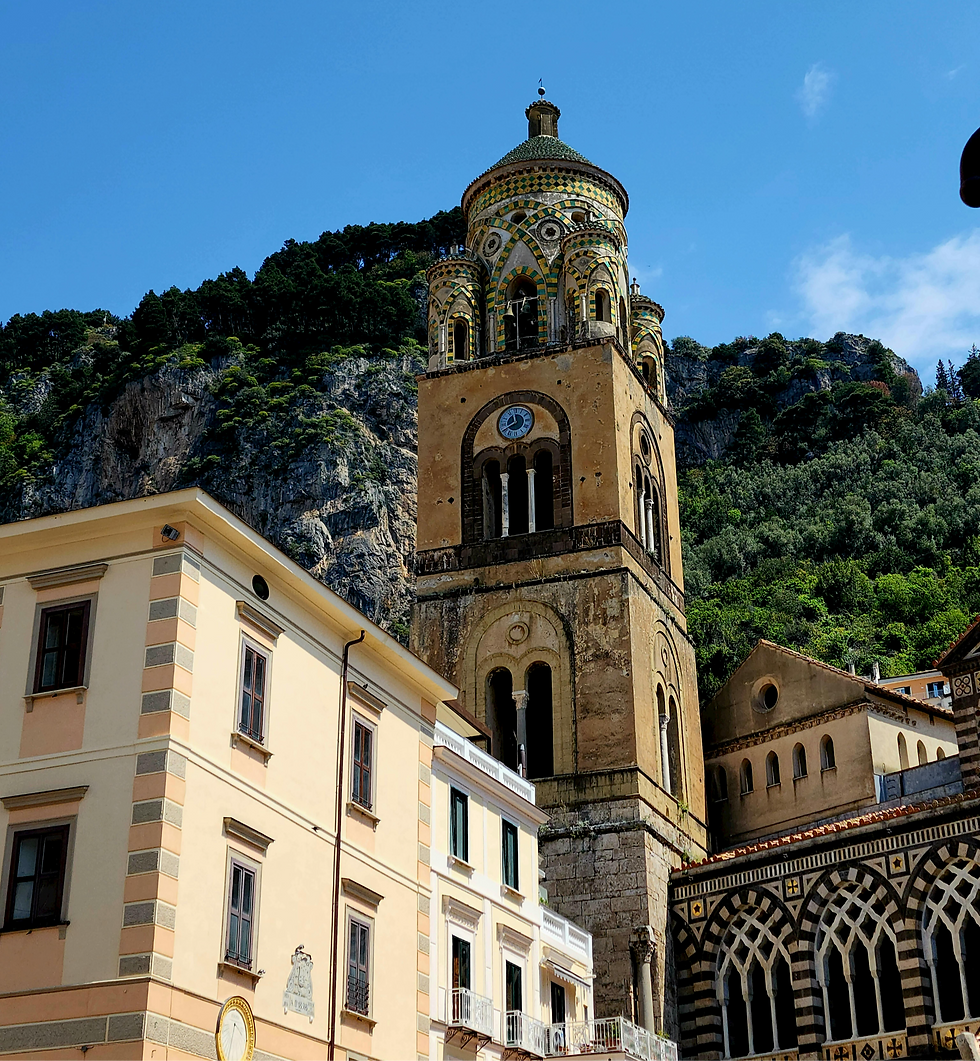
Old Town
From the cathedral, continue walking along Via Lorenzo d’Amalfi, the main street in town.
It’s a lively area full of limoncello shops, gelato spots, and cafés.
As always, the best part is getting lost in the side streets, which are much quieter and more authentic.
Piazza Spirito Santo
Walking along the main street, you’ll reach this square where you’ll find the famous Fontana Cap e Ciucci.
It’s an 18th-century stone and marble fountain that’s quite unique because it includes a submerged nativity scene.
It’s one of those corners that still feels very local.
Paper Museum
If you’re interested in history or want to add something different to your visit, you can continue along Via delle Cartiere and reach the Paper Museum (Museo della Carta) in just a few minutes.
It’s located inside an old paper mill and explains the important role Amalfi once had in paper production.
The walk to the museum follows along the Valle dei Mulini, a green area with remains of old mills, which creates a nice contrast with the busy historic center.
The visit itself is short and interesting, perfect if you want to take a break from the more crowded streets.
Beaches in Amalfi
After exploring the town, there’s nothing better than ending the day by the sea.
Just a few steps from the center, you’ll find both public beaches (which tend to be very crowded) and private beach clubs with full services.
Private beaches are more expensive, but much more comfortable and less crowded. They’re a great option if you want to relax and enjoy the sea without being packed in.
Approximate prices:
€60 to €120 per day per couple: usually includes 2 sunbeds and an umbrella.
Keep in mind that for prime locations or front-row spots by the sea, prices can be higher.
What’s Usually Included
Two sunbeds and an umbrella
Access to bathrooms and showers
Reserved area by the sea
Bar or restaurant service (food and drinks usually not included)

How much time you need: Our Opinion
Amalfi is the kind of place that’s best enjoyed slowly, just walking around and seeing where the day takes you.
Since it’s small and easy to explore, one day is enough to see it well and enjoy it without rushing.
It works really well as a stop within a bigger Amalfi Coast itinerary, combining it with other towns and returning to a more comfortable base at the end of the day.
During high season, the crowds are definitely noticeable, so going early or staying later can really change your experience and let you see a more relaxed side of the town.
Travel tips – visiting Amalfi
If you're planning your visit to Amalfi, here are a few things we’d keep in mind:
Ferry > bus (in high season)
It’s faster, more comfortable, and avoids traffic.
Go early
Midday gets very crowded, especially in summer.
Wear comfortable shoes
Even though Amalfi is smaller than other towns, you’ll still walk a lot.
Beach clubs are expensive
If you want a sunbed, prices can go up to €60–€120 per couple.
Consider where you stay
Amalfi is central, but Sorrento is often more practical for longer trips.
Plan it as part of a route
It works best combined with other towns on the Amalfi Coast.
Are you planning your trip to the Amalfi Coast?
After traveling through it ourselves, we created a super complete guide with the itinerary already organized day by day, so you don’t have to spend hours figuring out how to get around, where to stay, or what’s actually worth doing.

The guide includes:
📍 Day-by-day itineraries
📍 Interactive Google Maps
📍 Ferries and how to move between towns
📍 Real restaurant and beach recommendations
📍 Recommended accommodations
📍 Tips to save time and avoid unnecessary expenses
📍 Alternatives depending on your energy, the weather, or your travel style


Comments