What to Do in Rome: Must-See Landmarks, Neighborhoods and Food
Rome is an incredible city, full of history, art, and amazing food. It’s home to some of the most iconic landmarks in Europe and the world. Walking through its streets feels like an open-air museum, every corner has something to see
In this guide, we’ll show you what to do in Rome, combining landmarks, charming neighborhoods, and local food.
What You’ll Find in This Rome Guide
🟠 Colosseum, Forum & Palatine Hill – how to visit
🟠 Trevi Fountain – best times to go
🟠 Vatican City – tips and what to expect
🟠 Pantheon & Piazza Navona – iconic spots
🟠 Trastevere – local vibe and where to walk
🟠 What to eat in Rome – traditional food and spots
🟠 How many days you need – planning your trip
🟠 Travel tips – what to know before visiting
🟠 Our experience – what we loved most
What to do in Rome: landmarks and iconic places
🟠 Visit the Colosseum
It goes without saying that you can’t miss the Roman Colosseum, one of the most iconic landmarks in the world. This ancient amphitheater is a must-stop to understand the scale of the Roman Empire.
You have two options to visit it:
On your own (with or without a ticket): If you just want to see it from the outside, the best spot for that classic photo is Via Nicola Salvi. But you can also go inside and explore it on your own by buying a general ticket (online or at the entrance). It’s ideal if you prefer to go at your own pace without depending on a group.
Guided tour: This is the best option if you want to really understand the history in depth, skip long lines, and access exclusive areas (like the arena or underground) that aren’t always included in basic tickets.

🟠 Roman Forum and Palatine Hill
Just steps away from the Colosseum, you’ll find these two archaeological gems that were once the political, religious, and commercial center of Ancient Rome.
Walking through the Forum, you’ll literally be stepping on the same stones emperors once walked on, surrounded by temples, triumphal arches, and the remains of massive basilicas.
Palatine Hill, on the other hand, is the most central of Rome’s seven hills and the place where, according to legend, the city was founded. From here, you’ll get some of the best panoramic views of the Forum.
Recommendation: A guided tour is the best option here as well. It helps you skip long lines (especially important in high season), and many combined tours include access to restricted areas like the underground or the Colosseum arena.

🟠 Fontana di Trevi
This is, without a doubt, one of the most famous fountains in the world and a true Baroque masterpiece.
Built in the 18th century, it stands out for its massive sculptures representing Oceanus and mythological figures that almost seem to come to life over the water.
Tradition says that if you throw a coin over your shoulder with your right hand, you’re guaranteed to return to Rome.
Best times to visit:
🌅 Early morning (06:30 – 08:00): The best moment if you want to enjoy the sound of the water in peace and take photos without hundreds of people.
🌃 Late at night (after 10:30 PM): Fewer tourists, and the lighting gives it a completely different, magical vibe.
🚫 Times to avoid:
Between 10:00 AM and 6:00 PM, especially from May to October, when the heat and crowds can be overwhelming
Weekends, when the area becomes almost impossible to walk through
Keep in mind that even with these tips, nothing guarantees you’ll find it empty. Since many travelers try to avoid crowds, these time slots are also becoming more popular—but you’ll still have better chances.

🟠 Vatican City
This is an independent state located within Rome and the headquarters of the Catholic Church.
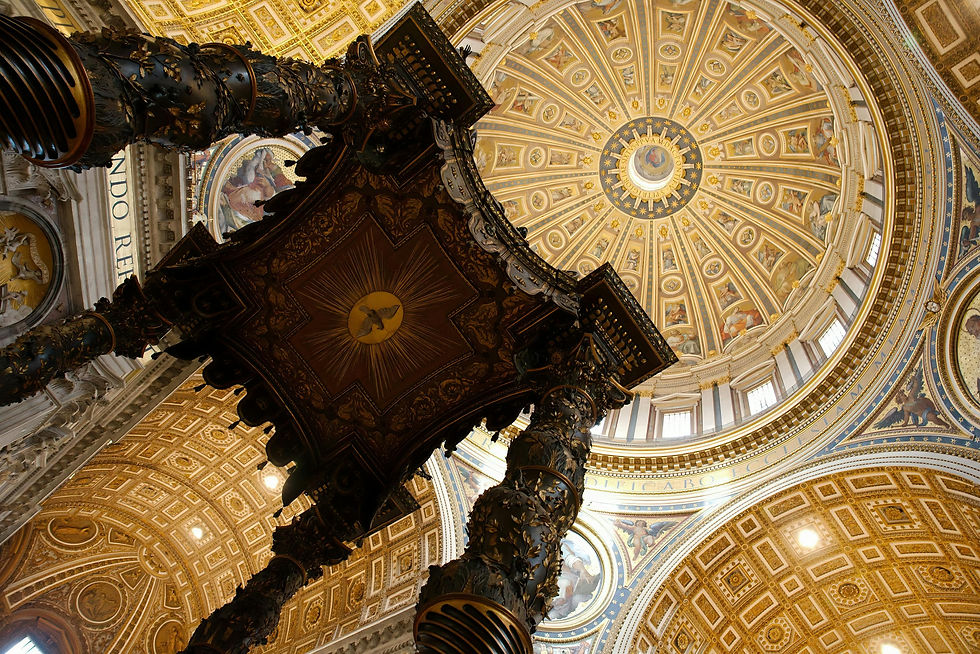
St. Peter’s Basilica is simply stunning. Its dome, designed by Michelangelo, and the sculpture of La Pietà are must-sees.
If you have the energy, we highly recommend climbing to the top of the dome for one of the best views in the city.
Inside the Vatican Museums, you’ll find one of the most important art collections in the world, with the Sistine Chapel as the highlight, decorated with Michelangelo’s famous frescoes.
Useful tips:
Dress code: Shoulders and knees must be covered to enter the Basilica and museums. Otherwise, you won’t be allowed in.
Tickets: For the Vatican Museums, it’s essential to buy tickets in advance online. Lines can be several hours long and tickets sell out quickly.
The visit is long, but absolutely worth it.
🟠 Pantheon
This ancient temple dedicated to all gods is probably the best-preserved building from Ancient Rome.
Its architecture is incredible—its dome is still the largest unreinforced concrete dome in the world.
The interior is stunning, especially because of the oculus, a circular opening at the top that lets natural light in and moves across the space throughout the day.
Fun fact: if you visit on a rainy day, you’ll actually see rain falling inside the temple and disappearing through nearly invisible drains in the marble floor.
You can also visit the tombs of important figures, like the famous Renaissance painter Raphael and the kings of Italy.
IMPORTANT!
You now need a ticket to enter the Pantheon. We recommend booking it online in advance, especially on weekends.
🟠 Piazza Navona
Without a doubt, one of the most elegant and lively squares in Rome.
What’s interesting is its long shape—it was built over the ancient Stadium of Domitian, where athletic competitions used to take place.
Today, the square is surrounded by impressive Baroque buildings and dominated by the Fountain of the Four Rivers, a masterpiece by Bernini.
It’s the perfect place to walk around, enjoy street art, and admire the architecture of Sant’Agnese in Agone.
Local tip: It’s tempting to sit at one of the restaurants in the square, but keep in mind they’re usually more expensive and not always the best quality. Walk a few streets away and you’ll find much better and more authentic options.
EXTRA TIP!
If you want to see the remains of the original stadium, you can go down to the underground level at one end of the square (separate ticket required).
🟠 Trastevere Neighborhood
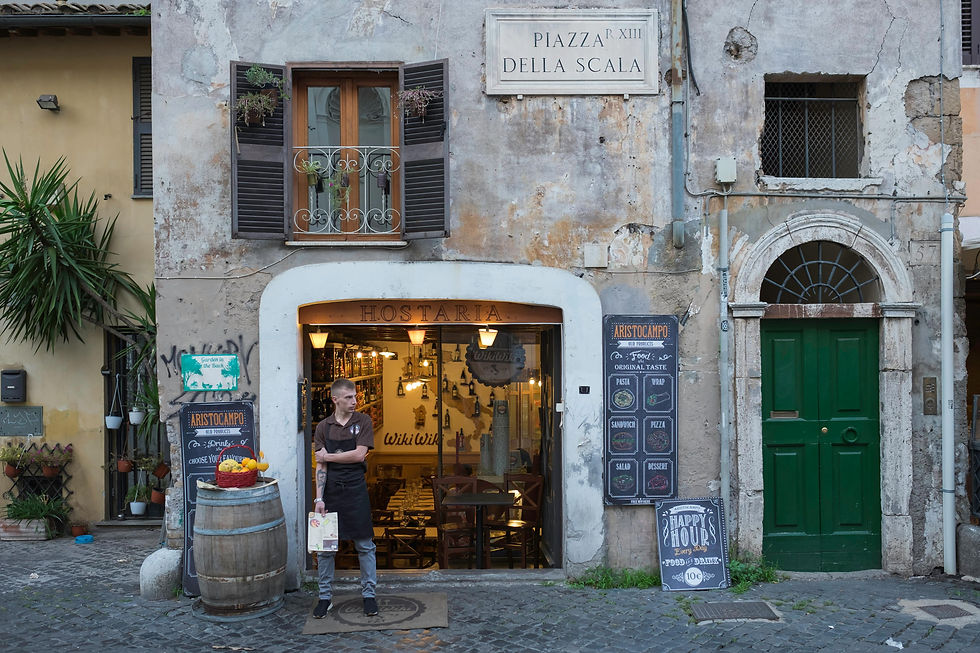
This is the bohemian side of Rome—a maze of cobblestone streets, ivy-covered buildings, flowers everywhere, and a relaxed atmosphere that really pulls you in.
It’s without a doubt one of the neighborhoods with the most personality in the city.
Perfect for dinner in a traditional trattoria, grabbing pizza al taglio (by the slice) while walking, or sitting down for an Aperol Spritz at sunset.
Don’t miss the Basilica of Santa Maria in Trastevere, located right in the heart of the neighborhood. It’s one of the oldest churches in Rome, and its golden mosaics inside are seriously impressive.
Tip: Even though it’s very touristy, Trastevere still has hidden corners. If you want to escape the crowds a bit, walk away from the main square and explore the streets heading up toward Gianicolo Hill, you’ll get an incredible view of the city.
Typical Food: What to Eat in Rome
One of the biggest highlights of Rome is its food, known for its authenticity and deep connection to local identity.
Here, traditional recipes have been passed down for generations.
Some of the most iconic places to eat include:
🍝 Osteria da Fortunata: Near Campo de’ Fiori, famous for its handmade fresh pasta—you can actually see the grandmas making it in the window.
🍝 Felice a Testaccio: Located in the Testaccio neighborhood, this is the place to try cacio e pepe, a traditional Roman dish done perfectly.
🍝 Pierluigi: A more elegant restaurant in Piazza de’ Ricci, known for its fresh seafood and classic atmosphere. Perfect for a special dinner.
🍝 La Carbonara: Right in Campo de’ Fiori, a must-stop to try one of Rome’s most iconic dishes.
🍝 Mordi Roma: Inside Mercato Nomentano, offering homemade dishes at affordable prices. Great for a quick and authentic local meal.
How Many Days Do You Need in Rome?
Rome is a huge city with a lot to explore. While you can see the main highlights in a short time, it’s best to take it slow:
2 days: Enough to see the main spots: Colosseum, Roman Forum, Trevi Fountain, and a night walk through Trastevere.
3 days: Adds the Vatican, Pantheon, and time to explore places like Piazza Navona without rushing.
4 days or more: Ideal. You can include museums, explore neighborhoods more slowly, and take time to just wander—which is honestly the best way to experience Rome.
Looking for Something Different?
Beyond the classic landmarks, there are experiences that show you a different side of the city:
👨🍳 Taking an Italian cooking class (learn how to make your own pasta)
💀 Visiting the catacombs (like San Callisto or San Sebastián)
🌅 Watching the sunset from Gianicolo Hill
🍷 Taking a food tour in Trastevere
These go beyond the typical experience.
🟠 Tips for Visiting Rome
Rome is one of those cities where planning helps, but not everything needs to be structured:
• Try to visit the main spots early → places like the Trevi Fountain or the Vatican get crowded really fast
• Book tickets in advance whenever you can → it saves you a lot of time and stress
• Wear comfortable shoes → you’ll walk a lot, and the cobblestone streets are no joke
• Avoid restaurants right next to major landmarks → walk a few streets away and the food is usually way better
• Bring a reusable bottle → you’ll find free water fountains all over the city (and they’re actually really good)
Our Experience in Rome
Without a doubt, it’s one of the most popular destinations in Europe, and for a reason.
Every step in this city feels like a gift. It’s impossible not to stop and admire the architecture and history around you.
The streets are beautiful, and the markets are full of incredible food, you can easily eat pizza or pasta every day without feeling guilty.
We absolutely loved Rome and truly think it’s a destination you have to visit at least once.
The only downside, as expected, is the number of tourists year-round. But honestly… it’s 100% worth it.
Keep Planning Your Trip to Rome
Rome is a city best experienced on foot, without rushing, and with time to get lost between squares, churches, and trattorias.
To keep planning your trip, check out our other guides:
👉 How to get around Rome – public transportation, tickets, and tips
👉 Where to stay in Rome – best areas based on your travel style


Comments