Mount Fuji in 2 Days — Scenic Drive, Viewpoints, and Local Experiences
Updated: May 29
Why visit Mount Fuji in 2 days from Tokyo
For us, giving Fuji two full days was the best decision of the trip. It let us enjoy it without rushing, connect with nature, and experience moments you simply don’t get on a one-day excursion.
This guide includes our exact day-by-day route, places to see Fuji, where to stay, where to eat, and practical tips for traveling independently.
A complete Mount Fuji guide from Tokyo: scenic drive, incredible viewpoints, traditional stay, and unique local experiences. Perfect for enjoying nature, Japanese culture, and iconic views without losing time in transport.
DAY 1
Driving to Mount Fuji

Renting a car in Japan — our experience
To visit Mount Fuji, we decided to rent a car instead of taking a bus or train, and we went all in with a sports car, Fast & Furious style.
Japan has endless rental options, from standard cars to classic or legendary Japanese sports models. Driving one made the trip even more special and fun, and gave us total freedom to explore the landscapes around Fuji at our own pace.
They’re usually more expensive and need to be booked in advance, but the experience is absolutely worth it.
👉 We chose a Honda Civic Type R (EK9) from Omoren.com
Highly recommended ⭐⭐⭐⭐⭐
International driver’s license in Japan (important)
⚠️ IMPORTANT: driving license in Japan
Japan is very strict about licenses.
You absolutely need an international driving permit to rent a car and avoid fines.
🕒 Trip duration
We did 1 night and 2 days, ideal for exploring the area properly, enjoying the scenery, and not rushing.
🍜 Lunch at Kosaku Kawaguchiko (Mōtō)

A traditional restaurant famous for hōtō, the region’s signature dish: wide ribbon-like noodles in a rich broth with vegetables and miso.
The place has a classic Japanese atmosphere, with tatami seating where you sit on the floor to eat, which makes the experience feel even more authentic and special.
🍦Dessert at Funari GELATERIA
A super cute gelato shop where the ice cream comes with a little Mount Fuji–shaped candy on top. Perfect sweet break after lunch.
Where we stayed in Kawaguchiko
We stayed in a traditional cabin in Fujikawaguchiko.
We wanted the full experience, so we looked for a Japanese house with:
Tatami
Futons
Traditional architecture
Highly recommended place: beautiful, great location, surrounded by nature, near Lake Kawaguchi.

Where to see Mount Fuji
Mount Fuji can be admired from many places — not just the famous Chureito Pagoda (though of course we went there too).
Some of the best viewpoints:
Lake Kawaguchi — our favorite view, incredible at any time of day
Lakes Yamanaka, Saiko, and Motosu — quieter landscapes and different angles
Oshino Hakkai — village with crystal-clear ponds and traditional houses with Fuji behind
Lake Tanuki — less touristy, with Fuji reflected in the water
Panorama-dai — hilltop viewpoint near Yamanakako with wide open views
Saiko Iyashi-no-Sato — reconstructed traditional village with thatched-roof houses
Mishima Skywalk — giant suspension bridge with Fuji and forest views
The famous Lawson view (Fujiyoshida) — yes, a convenience store… but with Fuji behind. The classic photo everyone wants.

💥 Local experience: Senko Hanabi 💥
The afternoon peaked when our Japanese friend Riho invited us to take part in a summer tradition: lighting senko hanabi, small handheld fireworks that release soft, quiet sparks.
She explained they symbolize the fleeting nature of life, and many people use that moment to make a wish.
We bought a small bucket set (they’re sold ready to use), lit them, and made a wish while they sparkled. It was a simple, fun, and very special experience that made us feel Japanese culture in a very close, personal way.
🍟 Improvised dinner at Don Quijote (Kawaguchiko)
WHAT IS DON QUIJOTE?!
An unmissable stop in Japan.
It’s one of Japan’s most famous discount store chains, with branches all over cities (like Don Quijote Shinjuku, Akihabara, or Asakusa).
You’ll find everything: Japanese snacks, souvenirs, electronics, cosmetics, clothing, accessories, and all kinds of quirky items. Walking into a Donki store feels like a mini shopping adventure, products everywhere and surprises in every aisle.
Typical or fun things you’ll find:
Unique Japanese snacks (rare-flavor KitKats, limited-edition chips)
Popular Japanese sheet masks and cosmetics
Costumes, affordable kimonos, and kawaii accessories
Classic souvenirs like charms, sweets, and tea sets
Cheap electronics and unusual gadgets
Absurd or funny gifts (handheld fans, giant plushies, weird inventions)
DAY 2
Chureito Pagoda and return to Tokyo
First stop: Chureito Pagoda
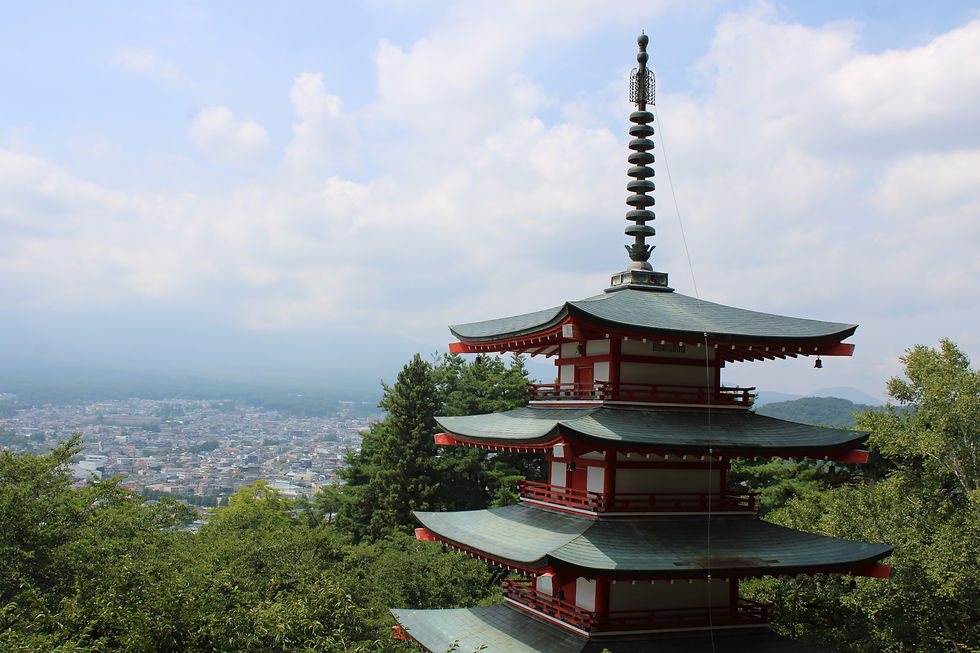
We visited the famous Chureito Pagoda, one of Japan’s most iconic viewpoints. The five-story pagoda aligned with Mount Fuji creates one of the country’s most recognizable scenes.
To reach the viewpoint you have to climb quite a few steps (there’s also a longer path without stairs), but the effort is completely worth it.
📌 Tip:
One thing to know before you go: Fuji is beautiful… but also temperamental. It doesn’t always reveal itself. Visibility changes a lot by season:
❄️ Winter — best time to see it in full clarity
Highest chance of deep blue skies and a perfectly defined volcano.
🍁 Autumn — very good visibility and incredible scenery
Second-best option. The air becomes drier after summer and days are usually clear, especially October and November.
🌸 Spring — more variable (but beautiful)
Sakura season is magical, but less predictable. Some days are perfectly clear; others Fuji hides behind soft clouds or haze.
☀️ Summer — when it hides the most
Most humid season with more cloud formation, especially after midday. Many people go in summer because it’s climbing season, but it’s also when Fuji is most likely not fully visible from afar. If you go then, wake up very early.
We visited in summer, and even though the experience was amazing, we didn’t get to see Fuji in its full glory.
🍜 Lunch at MIMASU Restaurant
After the visit, we drove a few minutes to a nearby village and found MIMASU Restaurant.
It wasn’t a tourist place at all, it was literally a woman’s home, where she cooks and serves everything fresh.
We ordered katsudon, her specialty, and it was one of the most delicious and authentic meals of the trip.
Returning the car and heading back to Tokyo
We returned the car and went back to Shibuya (we share more about this neighborhood here) to close our Tokyo journey.
Our recommendation for the last day is to return to the neighborhood you liked most or the one most convenient for your accommodation.
🍜 Dinner at Super Oreryu Shio-Ramen
We weren’t leaving Tokyo without one last ramen.
Here you order from a machine outside, go in, sit down, and the bowl arrives at your table. Super fast service and delicious ramen, the perfect way to end the trip.

Comments